

Knowing a little about leopards makes a safari more rewarding. Here are the basics that guides in Jawai explain on the hills.
What it looks like
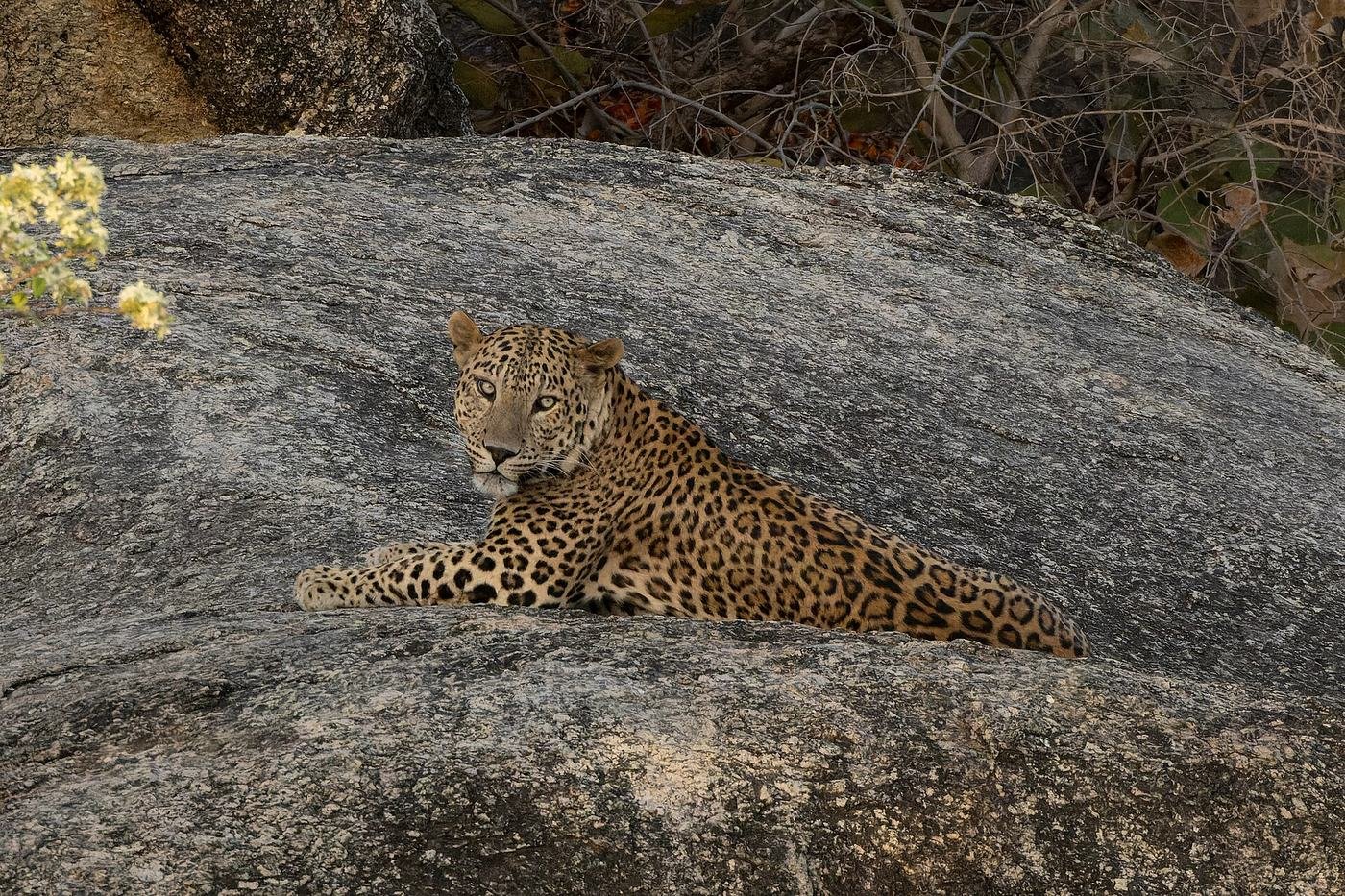
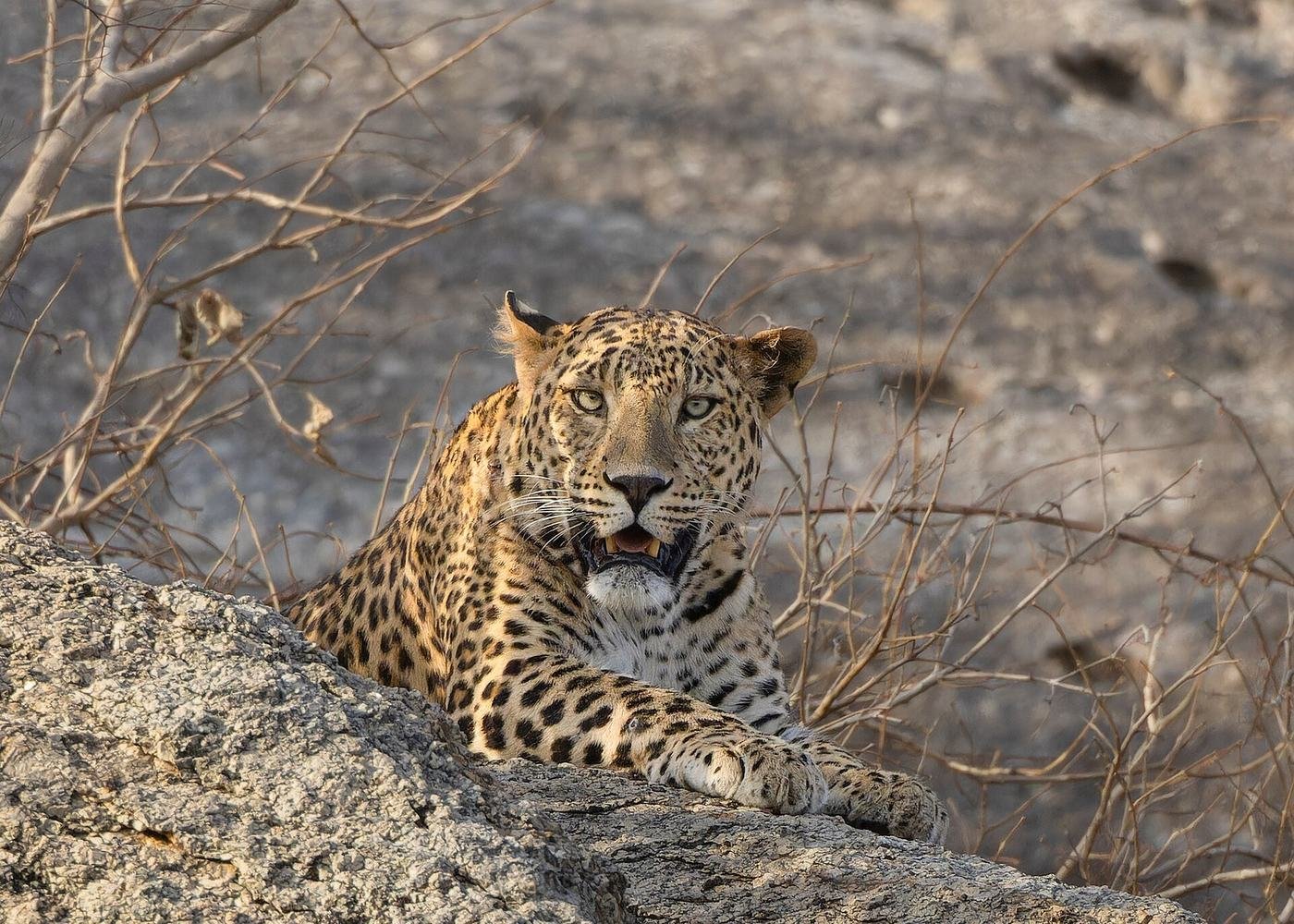
The Indian leopard has a golden to tawny coat with dark rosettes, which are rose-shaped spots, and a white belly. Males are larger than females, and an adult is a powerful but slender cat. Melanistic or “black panther” leopards are rare.
How it lives
- Mostly solitary, with territories that overlap.
- Most active at dusk, night and dawn, which is why drives are timed early and late.
- Excellent climbers and swimmers; it often rests on rocks, trees or in caves.
- Very quiet and well camouflaged, so spotting one takes patience.
What it eats
Leopards are adaptable hunters. They take small and medium prey such as rodents, birds and monkeys, and in places near villages they may also take stray dogs or livestock. Adaptability is one reason leopards survive close to people.
In Jawai
The open granite hills make leopards easier to see on rocks in the early or late light. Read our complete safari guide and how trackers find leopards.
Ready to see Jawai’s leopard country? Request a safari or message the team on WhatsApp, and read our complete safari guide.
Frequently asked questions
How big is an Indian leopard?
Adults are generally much smaller than a tiger, with males often weighing several tens of kilograms. Exact figures vary.
Are leopards dangerous?
They are wild predators and must be respected. Keep your distance and stay in the vehicle.
Do leopards live in groups?
No. They are mostly solitary, apart from mothers with cubs.