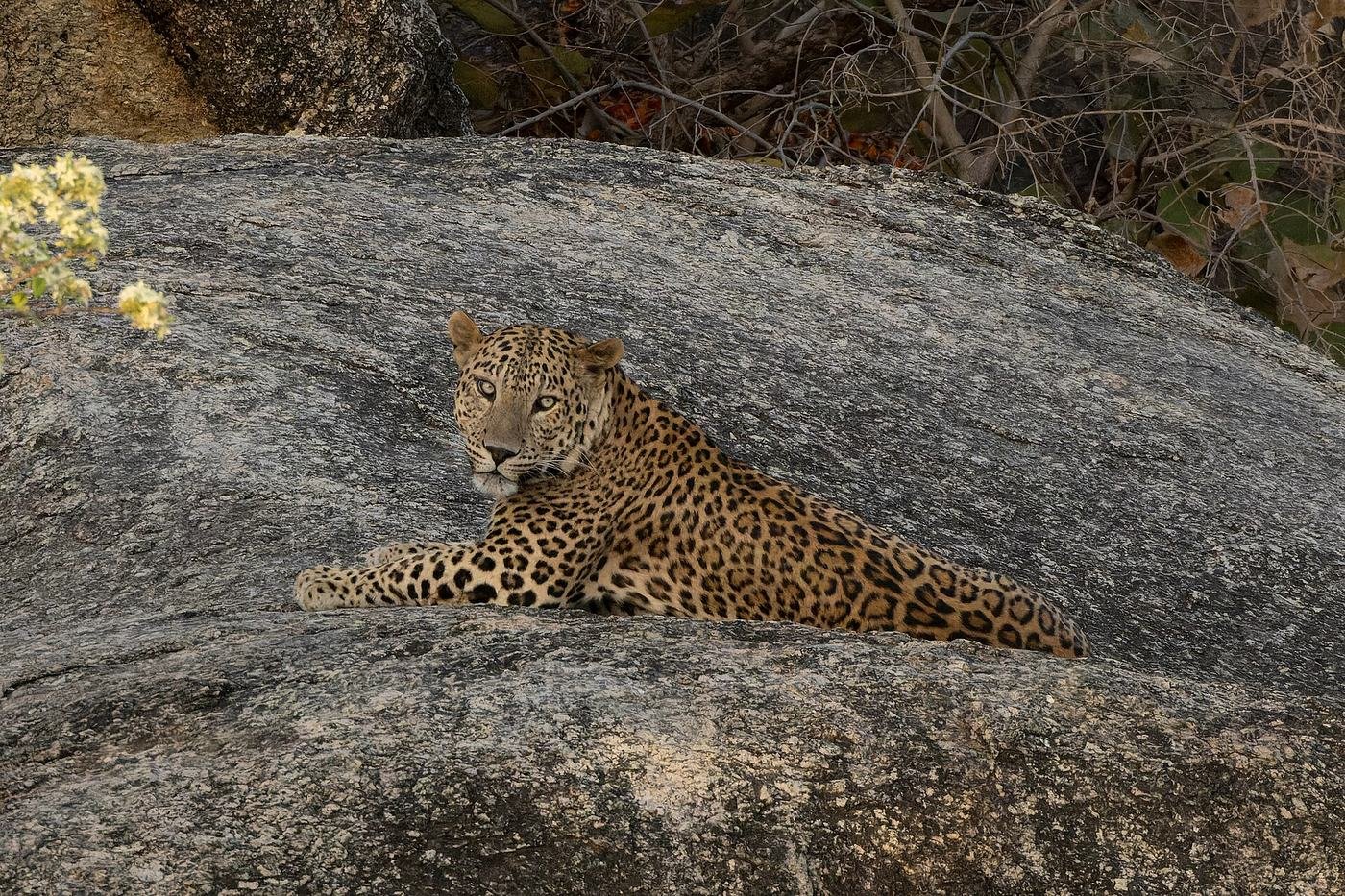


Jawai is one of the few places in India where you can look for wild leopards in daylight, on open granite hills, with villages and farms right next door. A Jawai leopard safari is quieter and more intimate than a big-park drive: small open jeeps, local trackers and long, unhurried scans of the rocks.
Where the safari happens
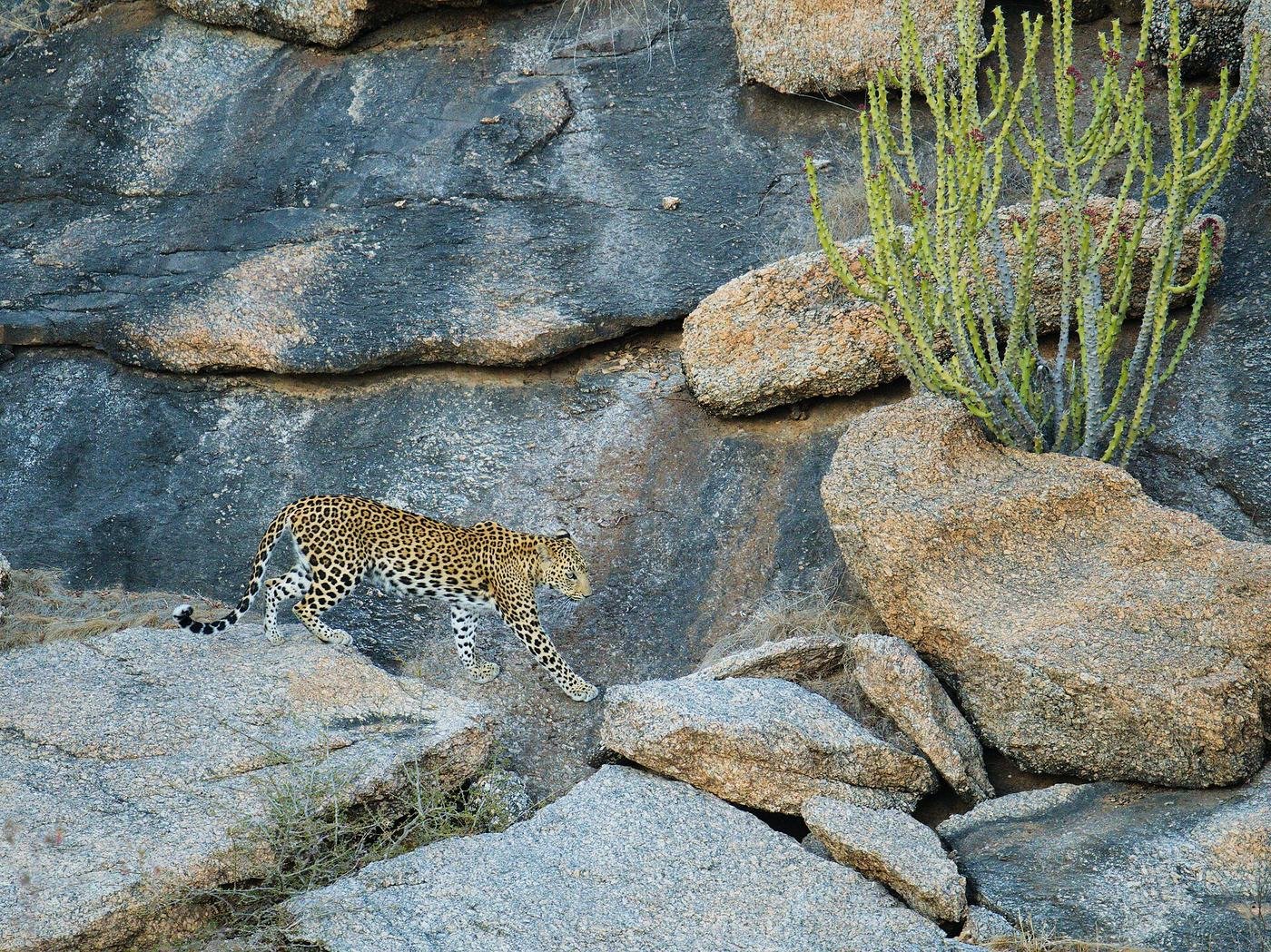
The leopards live on the granite domes and boulder fields around Bera and the Jawai Dam in the Pali district of Rajasthan. These hills are full of caves, rock ledges and small hill temples, which the animals use for shade and shelter. Much of the area is community land where herding families have lived beside leopards for generations.
How a safari works
- Vehicle: an open 4x4 jeep with a driver and a local tracker.
- Timing: two windows each day – early morning from first light and late afternoon until sunset. Leopards are most active when it is cooler.
- Duration: roughly three hours per drive.
- Method: trackers follow pugmarks, alarm calls from langurs and birds, and the hot rocks leopards like to lie on.
What you may see
Sightings can never be guaranteed, but Jawai is known for relaxed leopards resting on rocks. You may also see striped hyena, jackal, desert fox, mongoose, marsh crocodiles near the dam and a long list of birds. Estimates put the wider Jawai area at roughly fifty to seventy leopards, though there is no official count.
What to wear and carry
- Muted earth tones (olive, khaki, brown); avoid bright colours and strong perfume.
- A scarf or buff for dust, sunglasses, a hat and sunscreen.
- A light jacket for winter dawn drives, which can be cold in an open jeep.
- Binoculars and a camera with a 200–400 mm lens if you have one.
Booking your safari from Bera
The easiest way is to stay close to the hills. Our own safaris leave from Bera, so there is no long transfer before sunrise. See the current Jawai safari packages, then send your dates on WhatsApp from the booking page and we will confirm availability.
How to read the hills like a tracker
Leopards in Jawai rarely sit in the open for long. They choose rocks that give them warmth in the morning, shade by midday and a clear view of movement below. Look for dark shapes under overhangs, for a line of spots along a ridge, and for the way crows, langurs and peafowl look in one direction. A tracker will often stop the jeep and simply wait, because a leopard that has been seen once usually shows itself again within minutes.
Binoculars make a huge difference. Scan slowly from the base of a boulder upward, then across the skyline, rather than sweeping fast. Keep your eyes soft so that movement catches your attention.
What a good sighting actually looks like
A “sighting” is not always a close portrait. Many are a leopard resting 100 metres away, a cub moving between rocks, or a cat crossing a track at dusk. Treat each as a gift. If you see an animal at distance, switch off the engine, stay seated and let it settle. The longer you wait quietly, the more natural its behaviour becomes.
Sightings that feel special often include behaviour: stretching on a rock, scent-marking, a mother calling to cubs or a slow stalk. These are not things you can schedule, which is why several drives beat one long one.
Mistakes first-time visitors make
- Booking only one drive and expecting a guaranteed sighting.
- Wearing bright clothes or strong perfume.
- Talking constantly, which hides the tracker’s alarm-call cues.
- Rushing to a new spot every few minutes instead of waiting.
- Packing too little for cold mornings.
Plan three or four drives, keep a relaxed mindset and read what to pack before you arrive.
If you are still choosing dates, read our guide to the best time to visit Jawai.
Frequently asked questions
How long is a Jawai leopard safari?
About three hours per drive, in a private open jeep with a local tracker, at dawn and dusk.
Will I definitely see a leopard?
No honest operator can promise it. Jawai is known for visible leopards, and three or four drives raise your chances.
What time do the drives start?
Around first light, roughly 6:00 AM, and about 4:00 PM for the evening drive. Timings shift with the season.