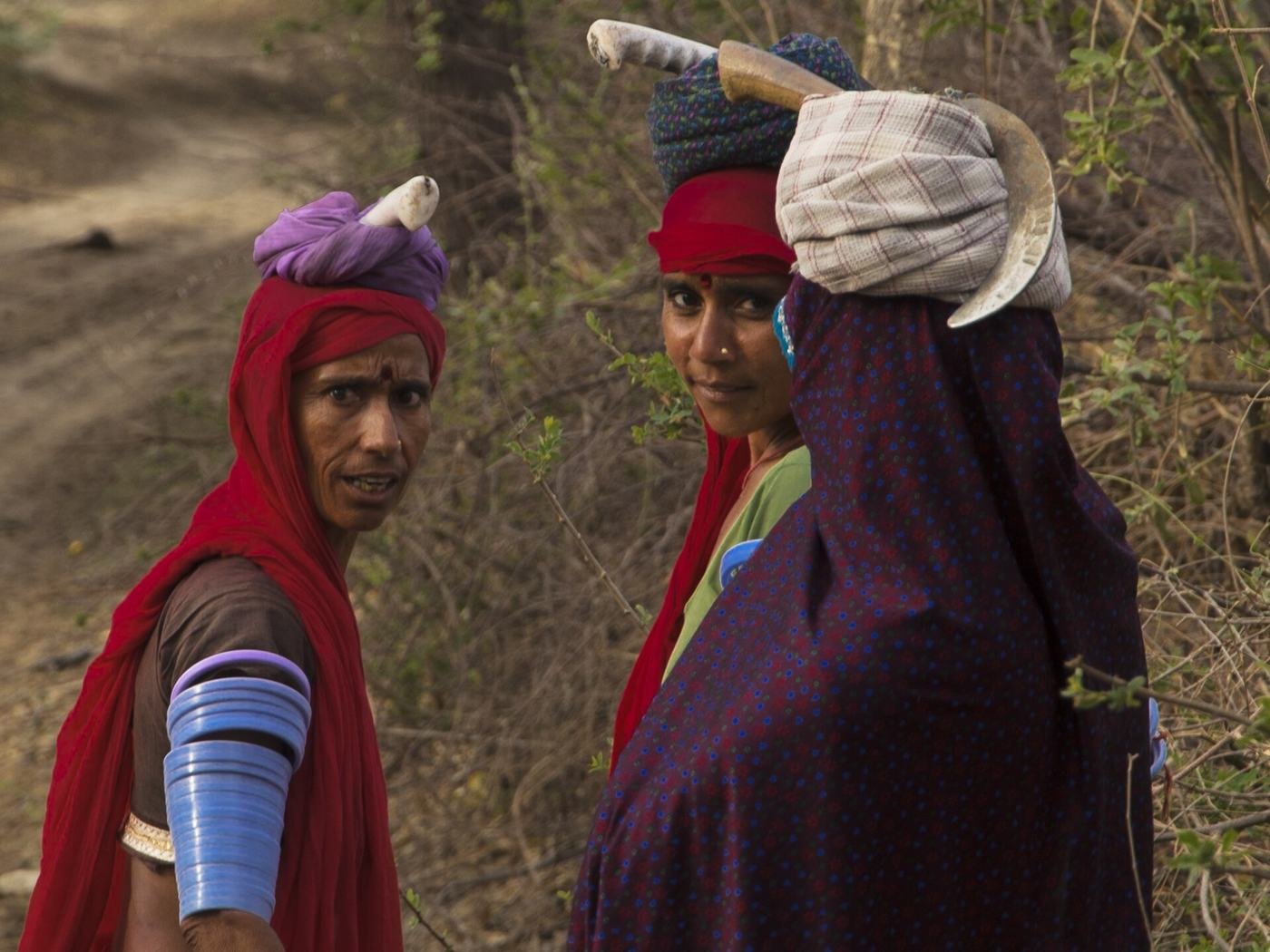


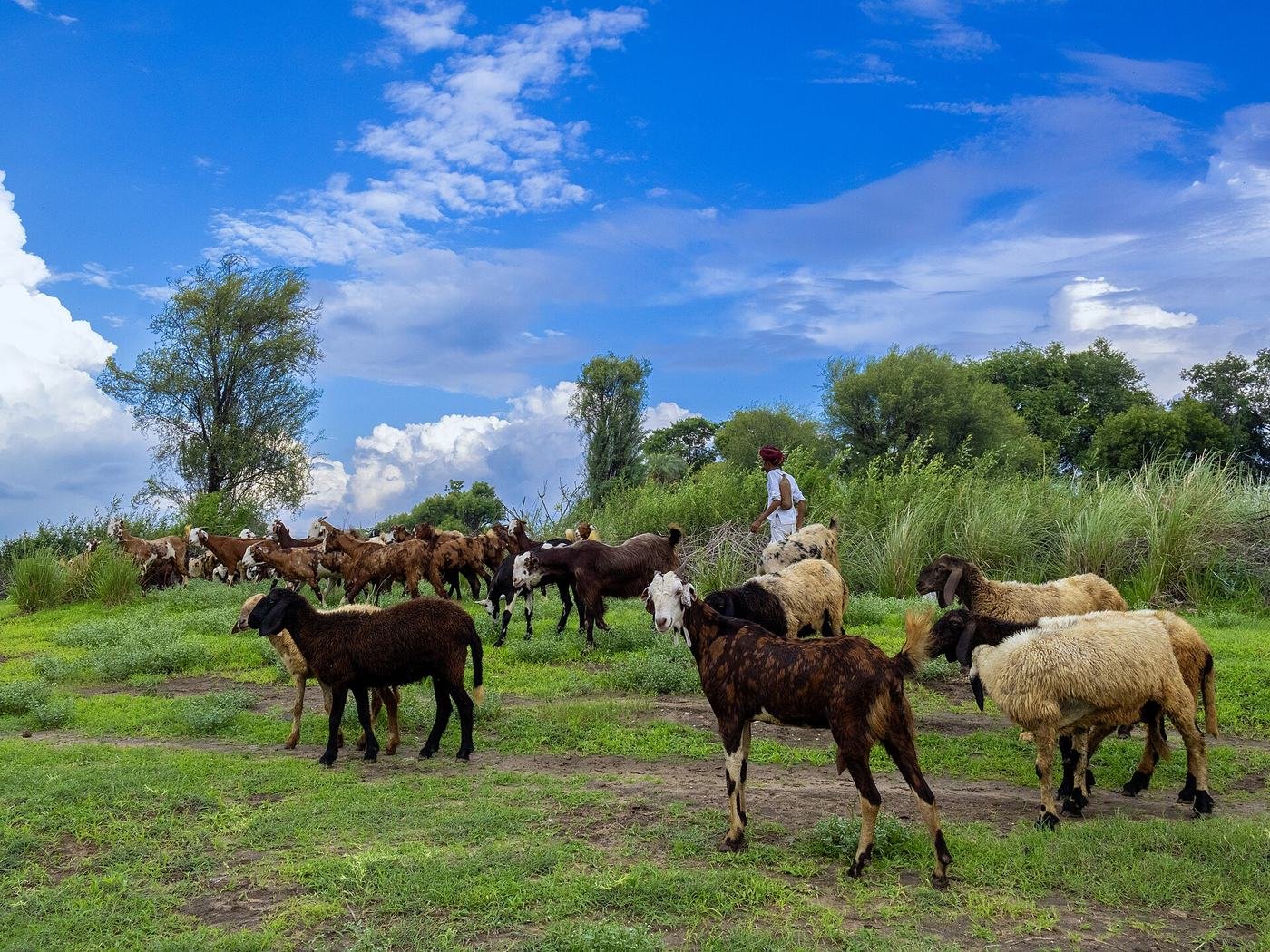
The Rabari are a pastoral community found across western India, traditionally herders of sheep, goats and camels. Around Jawai their villages sit right beside the hills where leopards live, and that closeness is the heart of the region’s story.
Distinctive dress
Rabari men are recognisable by bright red or white turbans, white dhotis and kurtas and heavy silver jewellery. Women wear embroidered shawls, bangles and layered ornaments. Colour and ornament often signal clan and marital status.
Sharing the hills
Granite hills here are not just wildlife habitat; they are grazing land and sacred ground, with small shrines tucked among the boulders. Leopards sometimes take livestock, yet in many places the community’s attitude has been one of tolerance rather than retaliation. That patience – and the habitat that remains – is a major reason leopards can be seen so often in Jawai.
What a village visit is like
- A walk through lanes with a local guide.
- Masala chai in a courtyard and conversation about herding life.
- A look at traditional crafts and household life.
Visits are most welcoming when guests are respectful: ask before taking photographs, dress modestly and treat it as a conversation, not a photo stop. Our Rabari village and culture visit is led by a local guide and takes about two hours.
A way of life built around movement
The Rabari are traditionally pastoral people who raise sheep, goats and camels and move with the seasons in search of grazing. Their knowledge of the land, water and animal behaviour is deep, passed down through families. Many now farm or work in other jobs as well, but herding remains a strong part of identity and culture.
Why Rabari tolerance matters
Leopards sometimes take livestock, which is a real cost to herding families. Yet many Rabari have long shared these hills with leopards, treating them with a mix of caution and respect. This tolerance is a major reason Jawai’s leopards are as visible and secure as they are. Visitors can help sustain it by choosing responsible operators and spending money locally. Read human–leopard coexistence.
Meeting people with respect
- Ask before taking photographs, especially of women.
- Do not offer money for pictures; buy chai or a small item instead.
- Dress modestly and keep your voice low.
- Do not enter homes or pens without an invitation.
- Learn a few words, such as “ram ram” or “namaste”.
See Rajasthani turbans and Rabari dress.
Pair it with a dawn leopard drive for a fuller picture of the landscape; the safari guide explains how.
Frequently asked questions
Who are the Rabari?
A traditional pastoral community who raise sheep, goats and camels and know the hills very well.
Can I photograph Rabari people?
Ask first, and do not pay for pictures. Buying chai or a small item is a kinder way to say thanks.
Why do leopards live near villages here?
The rocky hills offer cover, and local tolerance helps. See the article on coexistence for more.