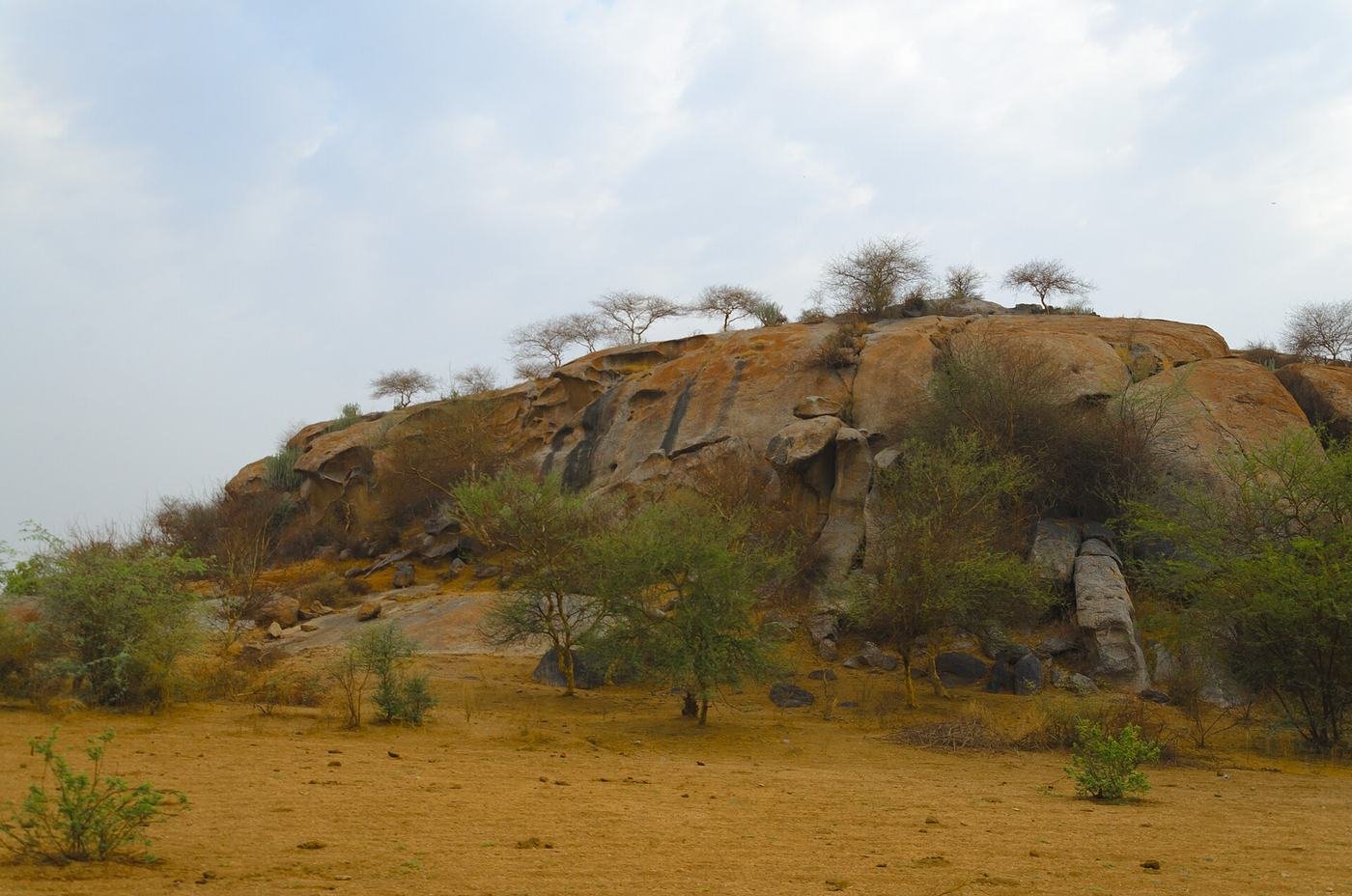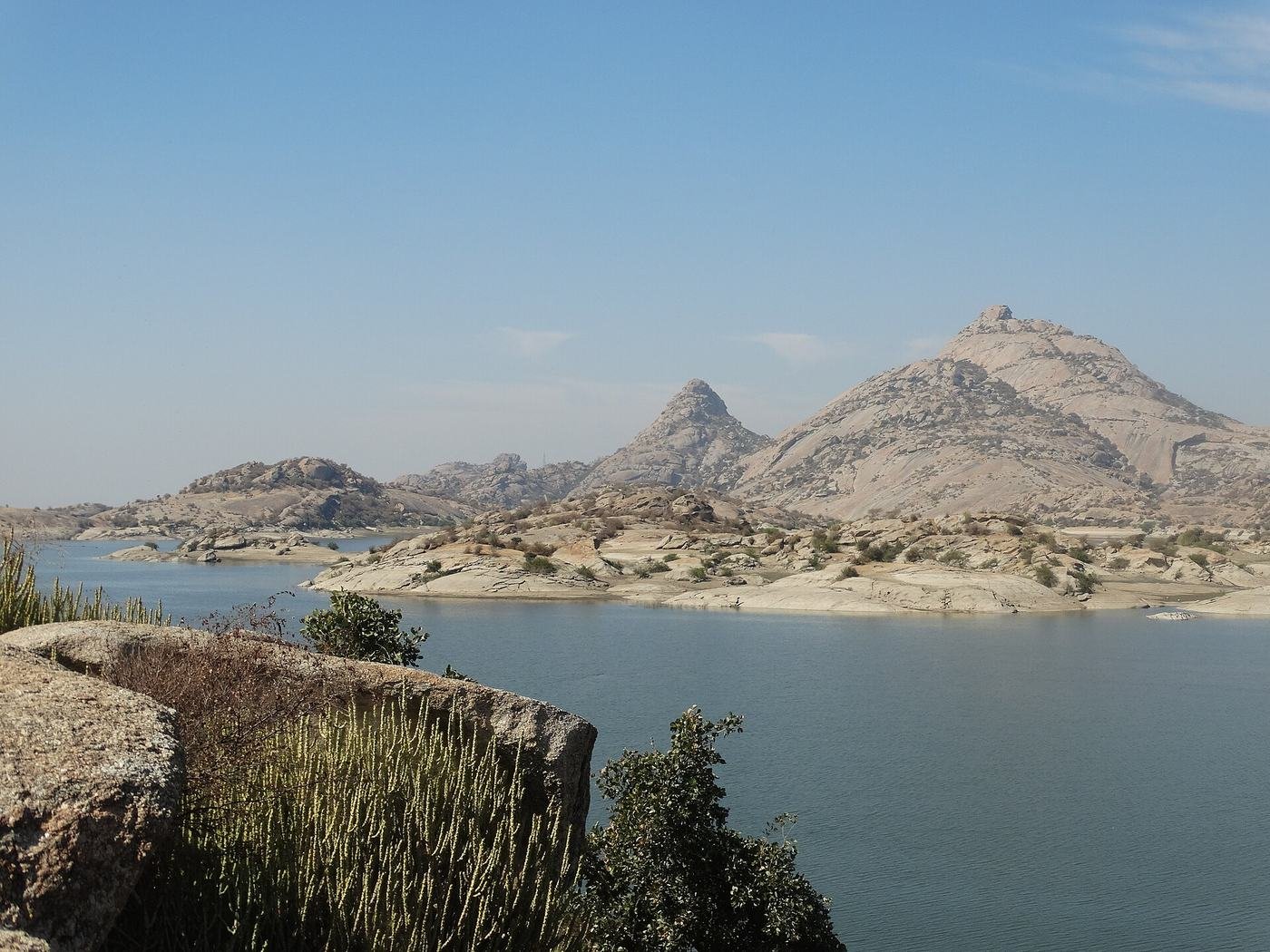


The Jawai hills are made of very old granite, shaped slowly by weather. Understanding how they form makes a drive more interesting and helps you read the land.
From rock to boulders
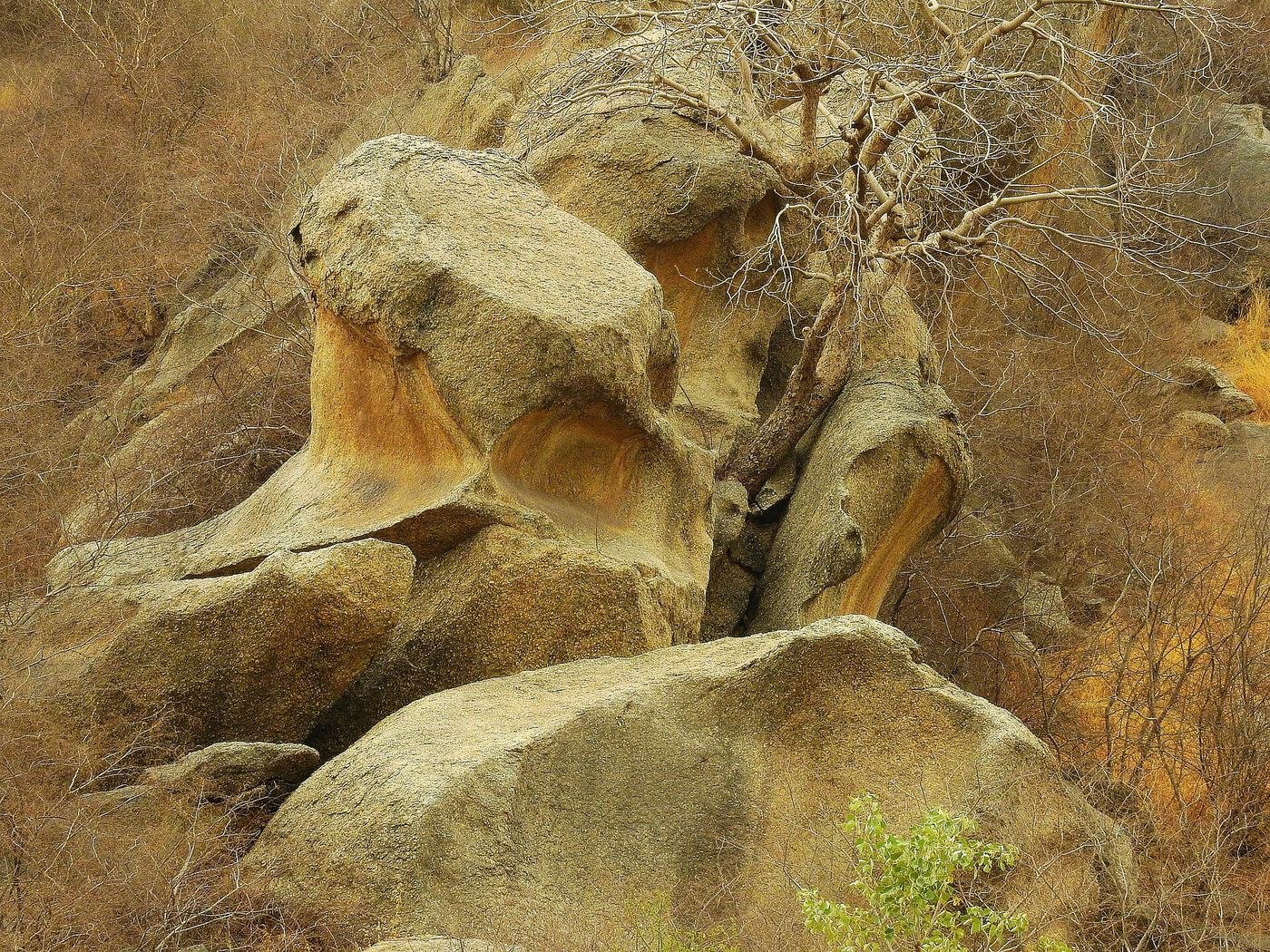
Granite cools underground and is later exposed. Water seeps into cracks, heats and cools with the seasons and gradually splits the rock into blocks, whose edges then round off. Over a very long time these become the domes and stacked boulders seen today.
What it means for wildlife
Gaps between blocks become caves and dens, rain collects in hollows and the open slopes give predators and prey room to move. Grass, thorn scrub and a few hardy trees grow in the soil between the stones.
Reading the landscape
Look for dark streaks of water stain, pale lichen on stone and flat sun-warmed slabs where animals rest. In the golden hour the rock glows orange and pink, which is why photographers love it.
Weathering and water
Where water collects, small pools form on the rock. They fill in the monsoon and can last into winter, drawing birds and animals. Streaks and stains on the stone show where water runs.
A landscape still changing
The process continues today, slowly. Frost, heat, roots and rain keep loosening blocks. What looks fixed is actually a patient, long-term process.
Want to plan your own drives? See our safaris, then send a request and we will suggest the best slots.
Frequently asked questions
How old are the Jawai hills?
They are among the oldest rock landscapes in India, formed over a vast span of time.
When is the stone most photogenic?
At sunrise and sunset, when low light warms the granite.
Can I climb the boulders?
Not without a guide. They can be slippery and leopards may rest nearby.